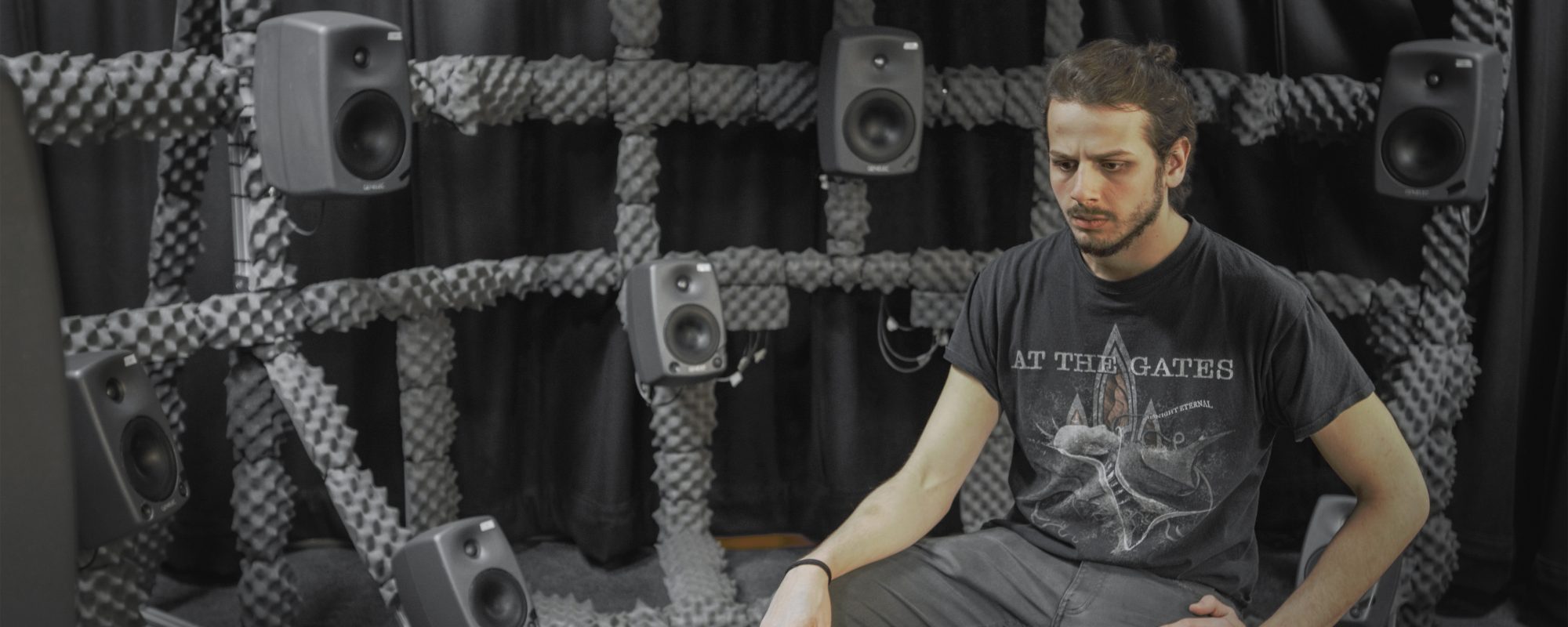
Ever since the beginning of this project I have been thinking of different ways to approach it. After attending two different meetings with the project’s supervisor Dr Frank Stevens and conducting individual research, the following aims were set:
Project Aims
Set up an experiment to study the scattering of sound in the surface of a cylinder at different angles using Impulse Response (IR) measurements. Compare the readings to the theoretical values obtained by Mores on his book Vibration and Sound [1]. Repeat the experiment replacing the cylinder by a real tree trunk and use the readings to compare the two. Analyse the IRs obtained to estimate the scattering and absorption of the tree trunk; use them to implement a digital filter. Create a simulation of the tree trunk in the anechoic environment virtually based on the real one. Model a forest based on the virtual tree trunk created, and study its acoustic characteristics.
Planning and Structuring the Literature Review
The aims set are challenging, but can be achieved, while taking into account that new ideas and problem will arise. While studying the background of forest acoustics, the topic was split into different components aiming to conduct individual research on each before the final project initiation. The areas aimed to be researched as part of the literature review are the following:
- Acoustics and Sound waves
- The Background of Forest Acoustics
- Acoustic Measurements, and Impulse Responses
- Artificial Reverberation
- Physical Modelling and Ray Tracing
- Virtual Simulation of a Real Acoustic Space
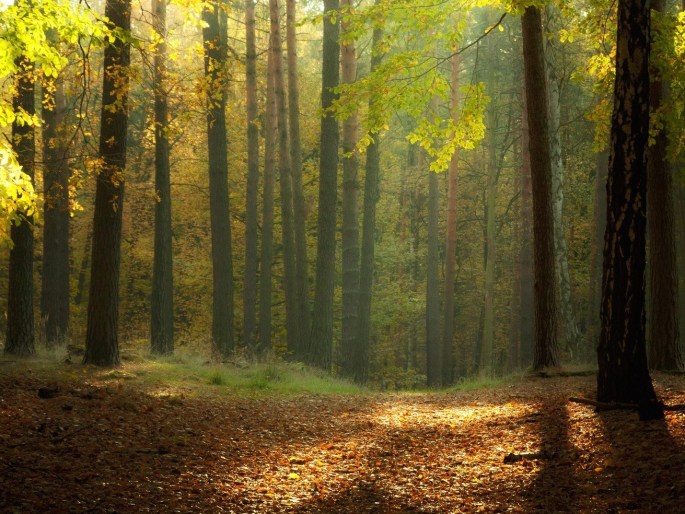
Figure: Picture of a forest taken from Miscellaneoushi.
[1] Morse, Philip Mccord, Acoustical Society of America, and American Institute of Physics. 1948. Vibration and Sound. Vol. 2. McGraw-Hill New York.
 George Sarantinos