
As shown in previous studies, the acoustics can vary significantly depending on the type of forest. The shape of the trees, together with the roughness and the density of their bark result into different values for the resultant scattering and energy absorption. When searching for the appropriate tree trunk for this project I contacted Sam Gilchrist, a Tree Surgeon from Manchester (UK), to find out more information about the types of trees, their texture and other characteristics. In summary he stated the following:
“The trunks can have a hard or soft surface, with the roughness of the bark coming in many variations. The texture ranges from very soft or having craters, all the way to consisting of thin layers that can often peel off. The hardness and roughness of the bark can change significantly with the age of the tree. After cutting down a tree, water slowly starts to escape making the bark softer and causing it to peel off.”
To narrow down the options, in order for the experimental procedure to be possible,
realistic and produce useful results, the following parameters were taken into consideration when searching for an appropriate trunk:
- Be accessible in the UK
- Have a cylindrical shape
- Have a hard but smooth surface
- Have a maximum diameter of 0.5m
- Have a maximum height of 2m
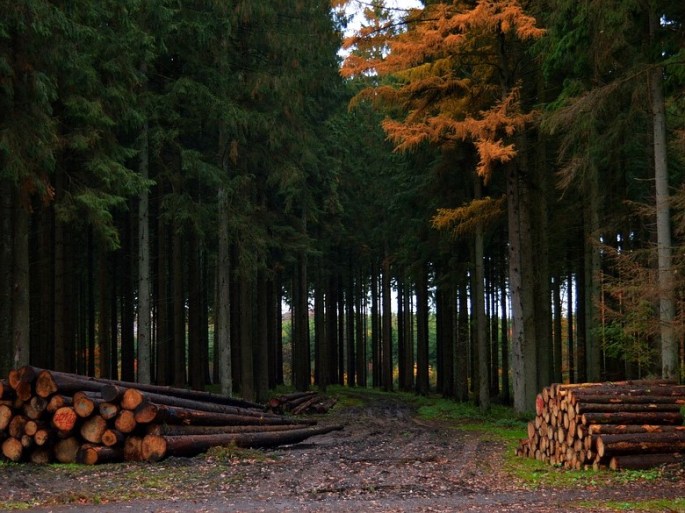
Figure: Chopped trunks in a forest, taken from Pixabay.
 George Sarantinos