Blog

Editing and Testing the Impulse Responses from York’s Grand Opera House

After performing deconvolution to the recordings of the Opera House, the final normalised Impulse Responses of the venue were obtained. In order to test the effectiveness of the recordings, Reaper was used to auralise an Anechoic Opera Recording which is an open source offered by the Università di Bologna with the  Impulse Responses obtained. The tracks were then mixed sending the instruments from the Orchestra Pit of the venue and the singing from the Stage. The final result was very realistic, with the Anechioc Opera sounding like it was properly played in the venue. The greatest flaw of the project was the single source in the orchestral pit, with all the instruments being projected from the exact same direction.

Reaper

Figure: Impulse Response Decomvolution using Reaper
Obtaining Impulse Response Measurements in York’s Grand Opera House

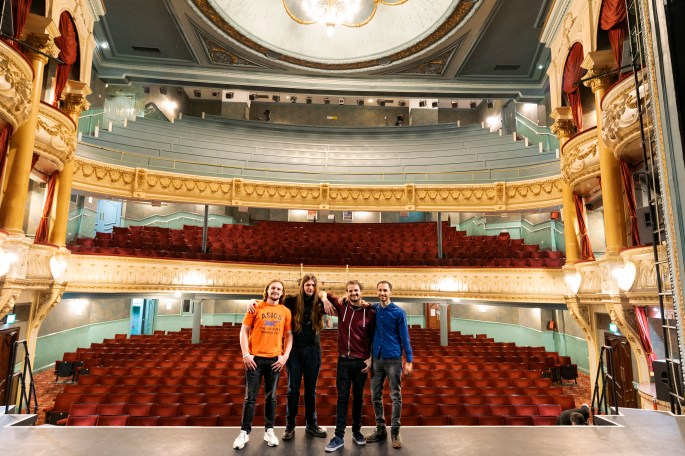
After contacting the venue in advance and informing them about the process and importance of Impulse Response Measurements, my team and I visited York’s Grand Opera House on Wednesday the 27th of February. Our aim was to move across all 3 floors of the opera house and changing each time the location of the source or receiving position. The process for obtaining the impulse responses was the same as mentioned in the previous BLOG, by using two Genelec loudspeakers and a Soundfield ST450 microphone. The two sources recorded were located in the center of the Stage as well as the center of the Orchestra Pit. The receiving positions were all across the sitting area of the venue, spreading in all 3 floors including on of the boxes in the side.

OperaHouse

Figure: Group picture taken inside York’s Grand Opera House after the measurements

Recording a Guitar Cover For my Instagram Account

After taking a break from playing music due to a busy term, it was wonderful to return to my guitar. The time away from the instrument resulted into excitement, and inspiration. In order to put those two qualities into good use alongside maintaining the level of performance, I decided to learn a song from one of my favorite bands “Gojira” and then perform a multi-track recording of it. It turned out well and hence I decided to shoot a video as well and upload the playthrough into my Instagram account!

Figure: Guitar cover of Oroborus – Gojira

Obtaining Impulse Responses in the Studio

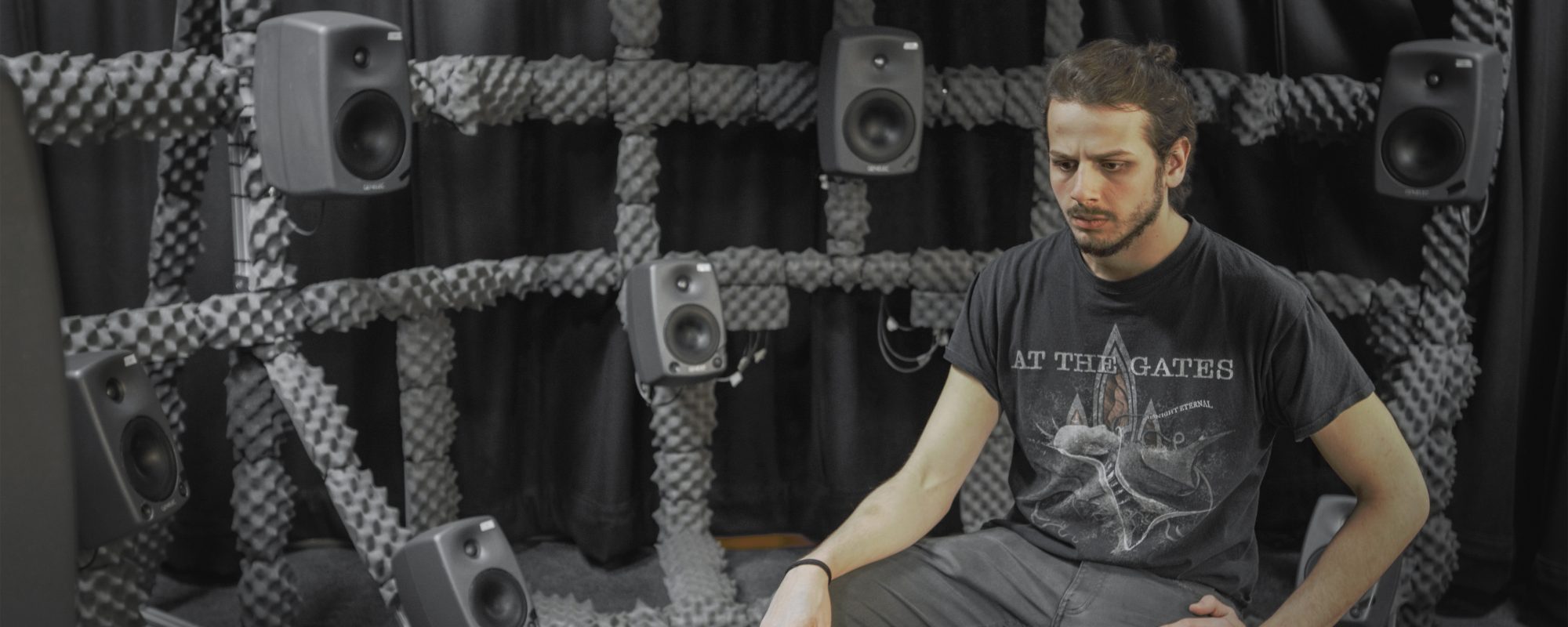
As part of our module we are required to visit some interesting acoustic space and perform Impulse Response Measurements. This process was new to all four members of my group and therefore, we decided to perform a trial session in the studio to make sure that we can operate everything correctly before moving to the intended acoustic space. In order for the measurements to be obtained, a sine sweep covering the entire hearing spectrum was played through a Genelec speaker and recorded using a Soundfield ST450 microphone. Deconvolution was then performed in all 4 channels to obtain the impulse response of the room.

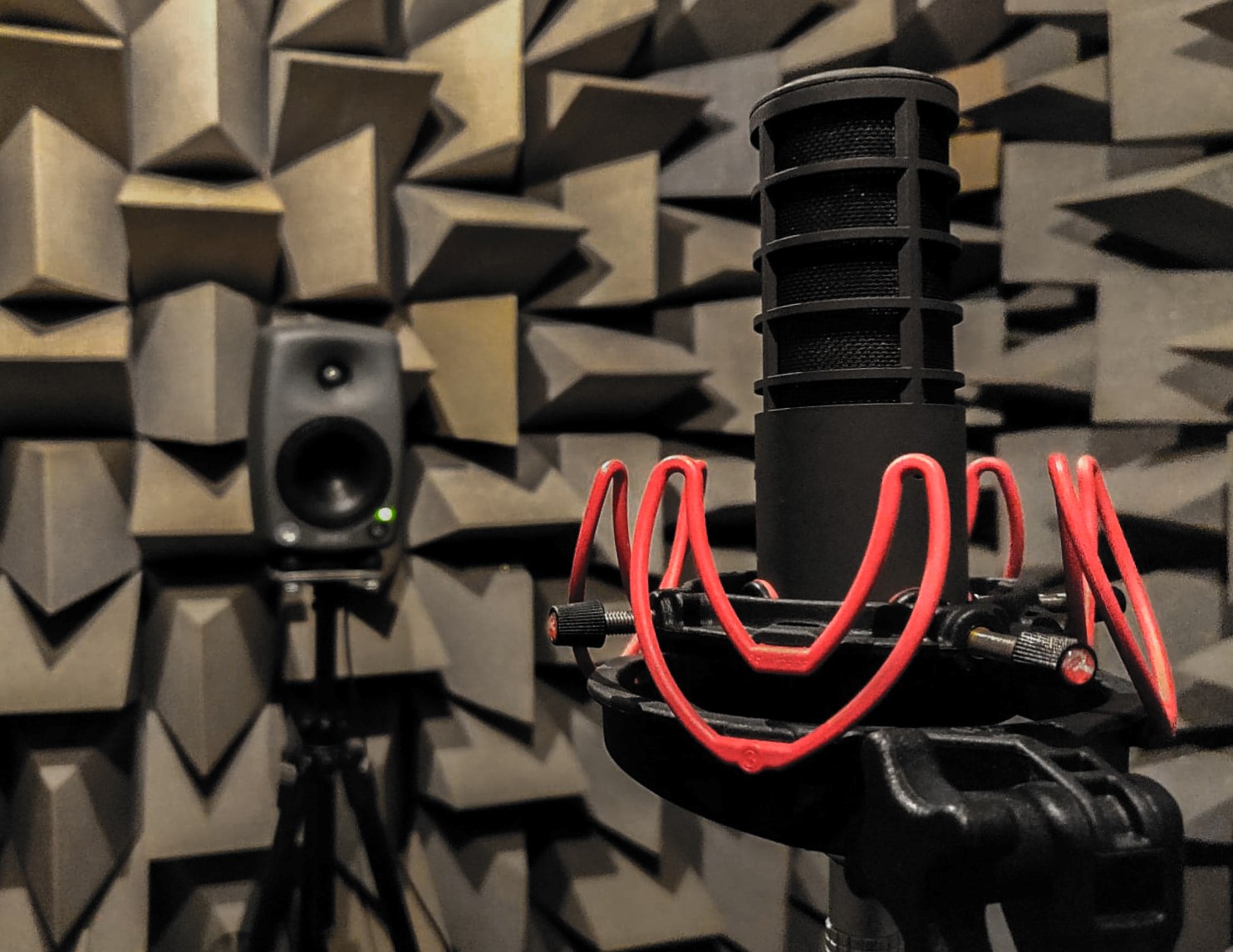
Once this task was completed, the process was repeated inside the Anechoic Chamber. The purpose was to investigate the frequency response of the microphone as well as familiarise with recording inside the chamber. The sweep recorded was later on analysed using MATLAB.

Anechoic

Figure: Obtaining Impulse Response Measurements inside the Anechoic Chamber